
Letting the Concrete Dry
Have you heard this phrase?
A colleague used it on a call with me recently and I was struck. Amazing. Yes.
Here's how I heard it: businesses go full steam ahead on scaling. They grow fast. And then, yikes. Boom. The foundation was never poured to hold that much weight.
Systems that worked before don't support the new version of the business. The things that were cobbled together, or living in one person's head, can't keep up.
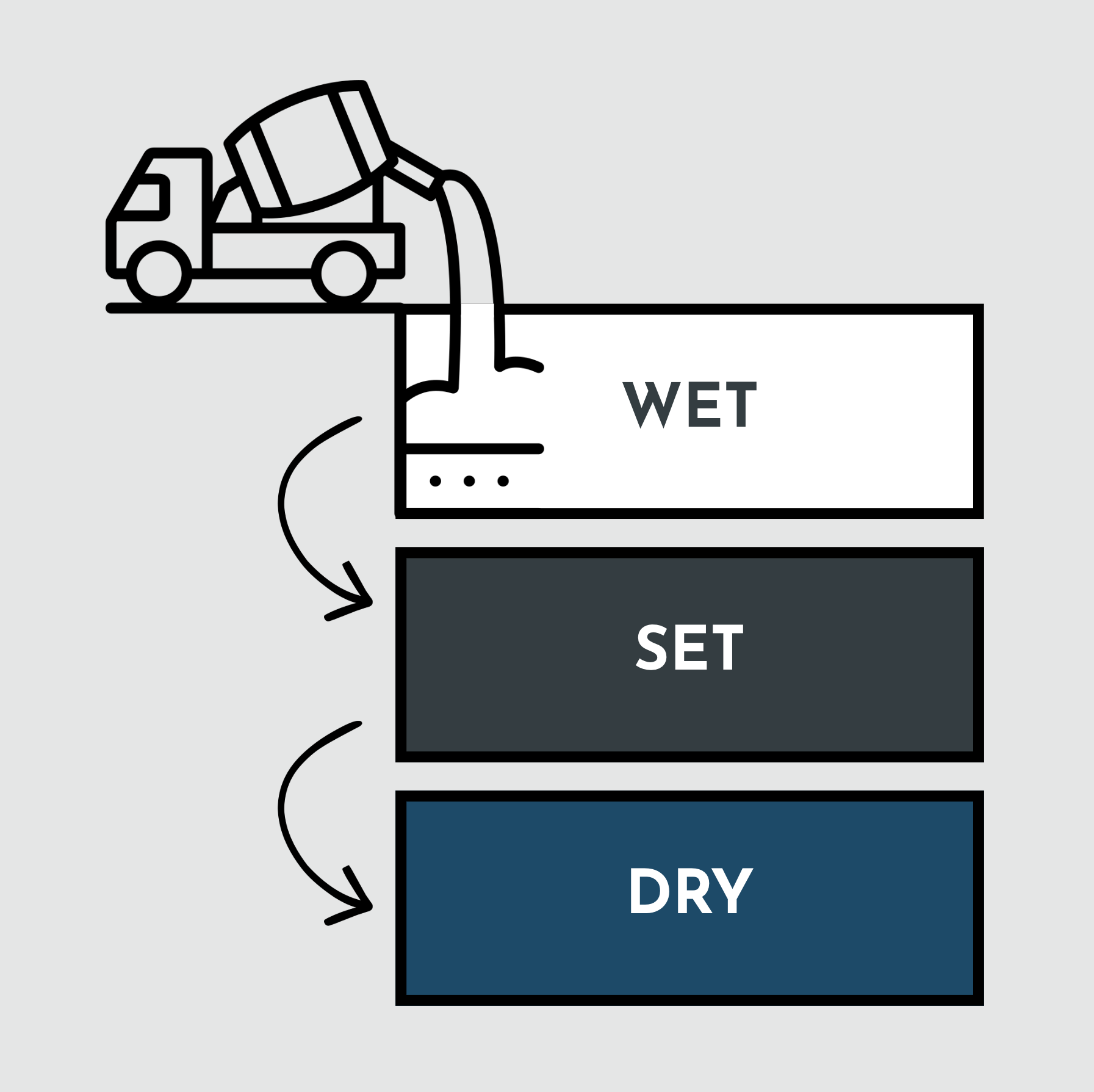
So you pour. You let it set. Then you build on top of it.
That's the whole thing. It's why some growth holds and some cracks.
Here's what that actually looks like when I work with a firm.

First we find where the concrete is already dry
Everyone braces for me to come in and tell them everything is broken. (I would dread me too.)
But most firms I work with have something solid already. They're just not standing on it.
I worked with a firm where the sales leader had inherited the entire marketing function. Contractors, agencies, a tactic here, a tactic there. She couldn't tell me where her best leads were coming from.
When we looked? They were coming from HER. Her, in the field. Her, in a room with people.
That was dry concrete. Nobody had named it, so nobody was building on it.
So we started there. Cut the contractors that weren't tied to anything, aligned the strategy to what was already working, and hit every marketing KPI in the first quarter.
Not because we invented something new. Because we found the part that was already holding weight.
Then we test where it isn't dry
This is the boring part. It's also where the money is.
We walk the entire path a lead takes through the business. Where it comes in, who touches it, what tags it, what happens on day three when nobody replies. And we find the soft spots.
I looked under the hood at a firm recently where there was exactly one thing you could do on the website. Book a call.
That's it. Every ad, every referral, everyone who wandered in through the blog. One door, and the door was a sales conversation.
So two things were happening at the same time. People who were interested but not ready just left, and nobody ever knew they had been there. And some of the people who DID book were only booking because it was the one button on offer.
A board member said it out loud on our call, and I have not stopped thinking about it. A lot of those people didn't want a sales call at all. They wanted information. Booking was the only way to get anything, so they booked.
So the head of sales is sitting there with a calendar full of conversations that were never going to close, while the people who actually needed two more weeks of information quietly disappeared. And she's reading that calendar as evidence that marketing isn't working.
Same firm, different leak: they had people out at networking events who aren't in sales. Good people, meeting good people. Those contacts were living in someone's head. Or in a spreadsheet, if they remembered to send it over.
Nothing about either of these looks broken. That's what makes them expensive. There's no error message when a lead leaves.
One more, because it's my favorite kind. A firm running real outbound, good volume, good discipline, good people making the calls. Then somebody finally looked hard at the list and realized most of the people they were calling didn't even qualify as buyers.
Same tactic. Same team. Same script. They fixed the inputs and the meeting counts went up dramatically.
This is what I mean when I say we isolate variables. "That doesn't work for us" is almost never true. Usually it's "that didn't work under the conditions we ran it in." Those are very different diagnoses and only one of them is fixable.
Then we shore it up, in order
Sometimes shoring up means connecting two systems that should have been talking two years ago.
Sometimes it means writing down the referral process that currently lives in the founder's memory and a spreadsheet on their desktop. (Mercifully, sometimes, the shared drive.)
And sometimes it means telling you not to launch the thing you're excited about. Not yet.
Not because it's a bad idea. Because if we run it right now it fails, and then you will believe forever that it doesn't work for firms like yours. That belief costs a lot more than the delay does.
We go in sequence for a reason. Pour, set, then the next layer.
Then we let it dry
We execute. We measure. We iterate.
My strategies run in quarters. Roughly three months of activation, then we sit down and look at what actually happened. Not vibes. What moved.
Some of it we keep. Some we adjust. Some we retire, now that we can say with confidence it was the timing or the tech and not the tactic.
And then we pour the next layer.
The reason this works isn't that it's clever. It's that the growth finally has something underneath it that can hold.
So what are you building on?
Have you let the concrete dry?
Amanda Berlin is a Fractional CMO who partners with financial advisory and professional services firms to transform their marketing capabilities into measurable drivers of growth. Through her strategic marketing planning process, she helps firms establish systems that create consistent, qualified leads while minimizing the operational burden on the leadership team.
